Checking behind the finish
Moisture readings around the shower, tub, toilet base and vanity show whether the wall cavity is wet. A hollow-sounding tile field and a soft baseboard tell the same story.
Bathrooms and kitchens give mold everything it needs: water, warmth and something to feed on. An independent provider can work out whether you have surface growth on grout and caulk or a wet wall cavity behind the tile, then quote the right job for it.
Surface growth on caulk and grout is a ventilation and habit problem. Growth that returns quickly, or is paired with any of the signs above, means water is getting past the finish and into the wall.
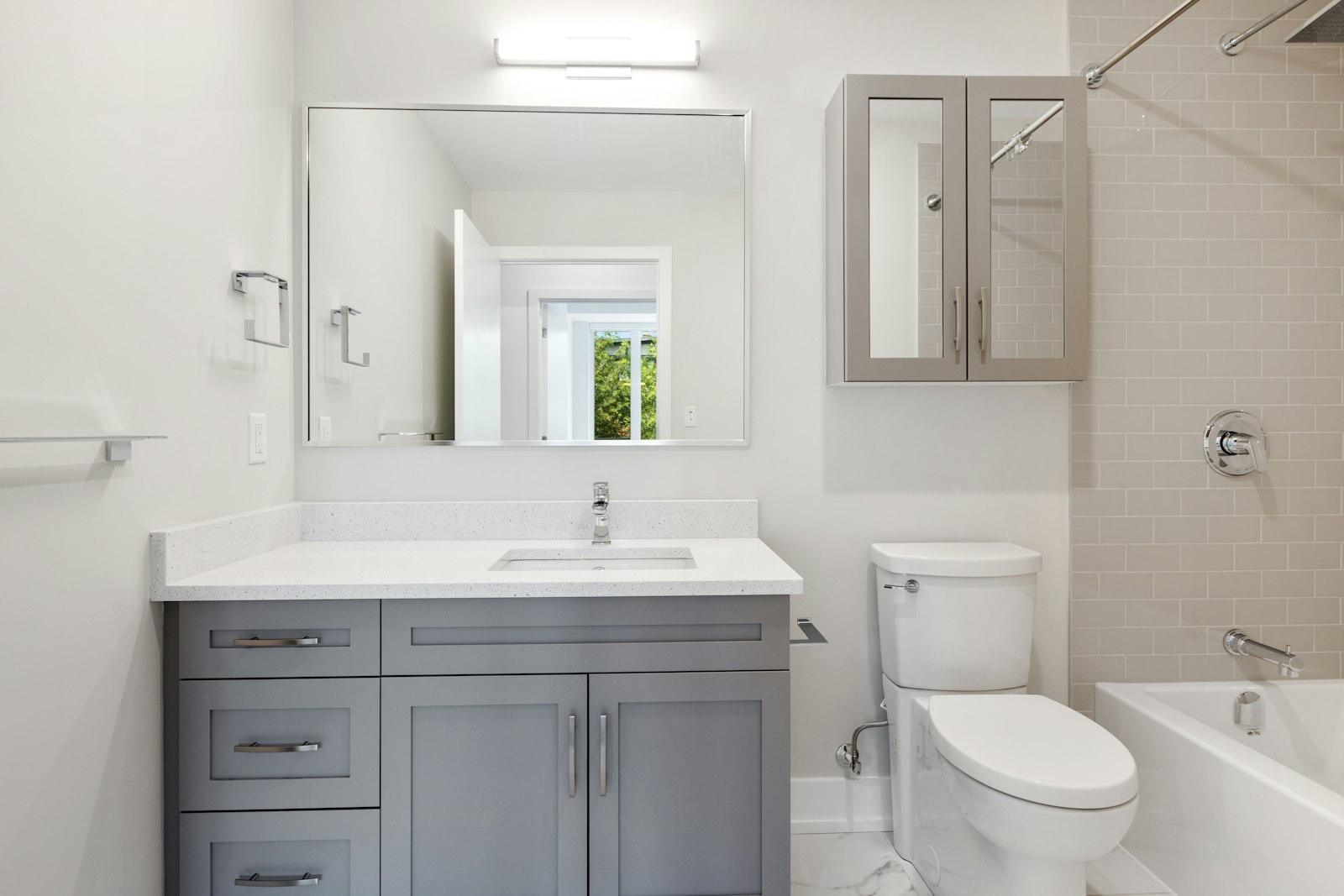
Small bathrooms can still hide large problems, so the visit starts with readings rather than assumptions.
Moisture readings around the shower, tub, toilet base and vanity show whether the wall cavity is wet. A hollow-sounding tile field and a soft baseboard tell the same story.
Where drywall, backer board or a cabinet base has to come out, the room is sealed and the air filtered so spores do not travel down the hallway.
Tile, glass, sealed stone, metal and porcelain can be cleaned and kept. Caulk and grout are usually cut out and replaced rather than scrubbed.
An exhaust fan that runs during and after a shower, and actually vents outside rather than into the attic, does more for a Cypress bathroom than any spray.
If the finding is genuinely surface level, the fix is small: cut out the old caulk, clean the tile, replace the sealant, run the fan properly and keep an eye on it. That is honest advice even though it is a smaller job, and you should expect to be told when that is all you need.
Where the wall is wet, the tile field usually has to come off in the affected area so the material behind it can be removed and the space dried. That is a bigger conversation, and it is worth having before a leak quietly works its way into the ceiling below.
Read removal versus remediation to see which side of that line you are on, or call about a mold inspection if you cannot tell. The containment process is described under mold removal, and preventing mold in humid homes covers what keeps it from coming back. Check the service areas for your neighborhood.
Mostly whether the work stops at the surface or goes behind the tile. Caulk and grout replacement is a small job; opening a wet shower wall, removing backer board and drying the cavity is not. Ask the provider to quote after taking readings.
Usually because the room never fully dries. Run the exhaust fan during the shower and for a while after, keep the door open afterwards and squeegee the walls. If it still returns within weeks, water is likely getting behind the caulk.
The cabinet floor is usually particleboard, which swells and holds water, so it often has to be replaced rather than wiped. Fix the drip first, then decide on the cabinet. Call about an inspection if the smell is stronger than what you can see.
A small amount of surface growth is common in a humid climate. It can irritate, and people with asthma or allergies may react, so clean it up and improve ventilation. Anything about symptoms should go to a doctor, not to a mold provider.
Describe where the growth is and whether the wall or floor feels soft.